




Grain, like any other agricultural product, is not a stable asset. It can lose certain properties, qualities, and physical parameters before it reaches the consumer. And a significant portion of these characteristics is lost precisely during transportation. However, this process can be easily calculated, predicted, and, accordingly, controlled.
Types of Grain Losses During Transportation
Since grain is a relatively unstable asset, it can be lost during transportation. These processes cannot be fully eliminated. Agricultural products can be lost both during movement and while trailers or trucks are parked.
In general, all losses are divided into:
- natural;
- “illegal”.
“Illegal” losses refer to the direct theft of grain during its transportation stages. There are situations when a certain percentage of the product’s weight may disappear during receiving, loading, or unloading. To prevent such losses, it’s better to use visual video monitoring at each stage of transportation.
Natural grain losses can occur due to the imperfections of the equipment transporting it. Even the most modern equipment does not guarantee perfect loading and unloading of the product. Natural losses also include the abrasion of grain during movement, its mechanical damage, and moisture loss during transportation. All of these factors combined can result in a significant reduction in weight at the first weighing stage and all subsequent ones.
Types of Grain Transportation
Grain transportation will be necessary in any case. It’s important to understand that there are various ways to deliver the harvest from the field to its further storage or sale points. These methods include:
- Rail;
- Trucks;
- Other types of transport.
Rail transport is one of the most common and efficient methods of transporting grain over long distances. Freight wagons can accommodate a lot of products, allowing for a larger amount of harvest to be transported at once. The risk of losses according to regulatory standards is estimated at up to 0.5%. This is a significant figure, leading many owners to gradually switch to truck transport, where losses according to the standard do not exceed 0.07%.
Transportation by specialized trucks has many different advantages. These include the speed of grain delivery, the flexibility of route planning, and the availability of this transportation option to a larger number of farmers.
Established Norms for Losses during Transportation
Understanding the norms of natural grain losses and agricultural products during transportation is crucial for ensuring accounting accuracy and minimizing economic losses. In Ukraine, the norms of natural losses of grain transported by rail and road are regulated by special resolutions. According to these regulations, natural losses of grain or other agricultural products during transportation by trucks and similar specialized equipment, such as a grain trailer, depend on the type of cargo and transportation conditions. For instance, when transporting grain in bulk regardless of distance, the losses amount to 0.07%, and in containers – 0.05%.
It’s worth noting that the mentioned norms for grain transportation losses are maximums and are used during any ambiguous situations. The carrier-operator has the right to change these norms and to specify them in the transportation contract. For example, Ukrzaliznytsia (Ukrainian Railways) has set loss norms up to 0.5%. This encourages more agribusiness owners to use truck transportation with fewer losses. Moreover, in such a case, they are significantly easier to control.
How to minimize losses during grain transportation?
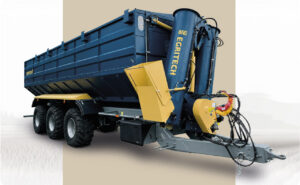
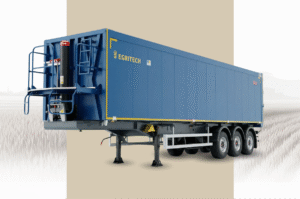
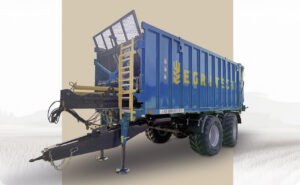
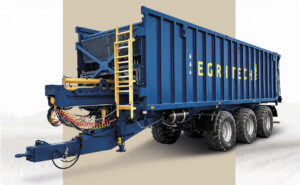
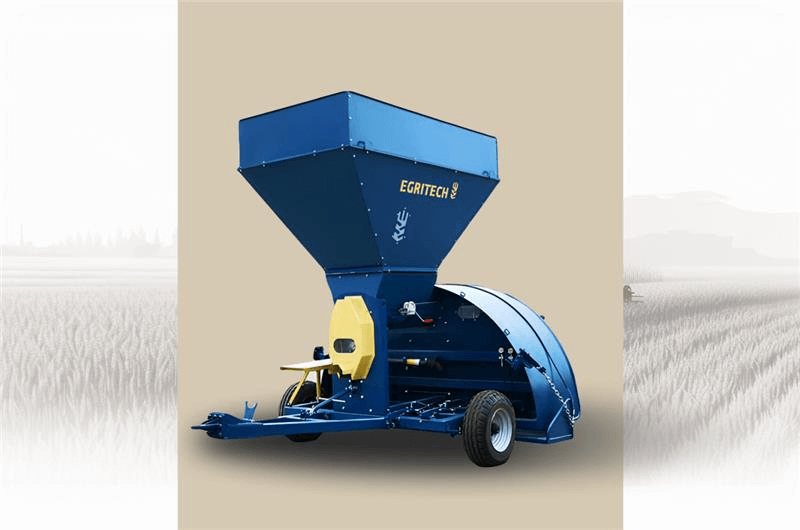
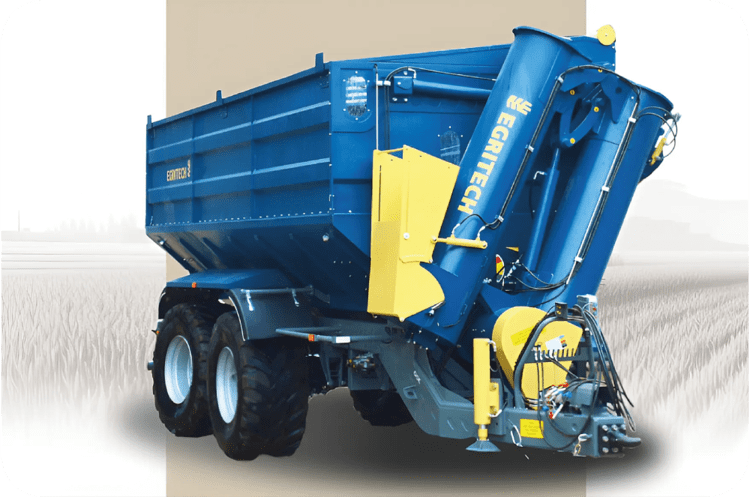
Thinking about minimizing grain losses during its transportation should begin at the harvest collection stage. To reduce the amount of lost agricultural products as much as possible, it is better to use proven equipment. In this process, BMPs (Bulk Material Processors) greatly assist. Modern models are immediately equipped with scales for more precise control of the collected products. EC (European Community) machinery also has integrated video monitoring systems. Accordingly, the amount of losses at the harvest collection stage is completely minimized. We suggest purchasing equipment from the reliable manufacturer Egritech, which has been one of the leaders in the sale of harvesting machinery for many years. In the assortment, you will find all the necessary machines, trailers, and semi-trailers for grain carriers.
In addition, it would be useful to ensure reliable sealing of the vehicle’s body. This will help to reduce the amount of grain loss through the body gaps during transportation. This method is particularly relevant when planning the transportation of small crops (millet, soybeans). Quality trailers are also an integral part of proper grain transportation. Tractor grain carriers, grain loader, semi-trailer grain carrier with an aluminum body – this is not an exhaustive list of special machinery that will allow significantly optimizing losses at the loading and unloading stages.
The grain reception location can also be prepared in advance to significantly reduce natural grain losses. Installing mirrors is a good way to optimize; they allow seeing the grain surface in the machine body from the ground level. Before starting unloading, it is important to check the scales. They must be fully functional and accurate. In case of problems detection, it is necessary to demand the stop of shipment and repair of the scales.
As for natural losses, they can also be minimized by an accompanying vehicle, which will monitor the level of grain losses. Some owners use this method as it comprehensively solves several tasks at once, including potential fraud by drivers. In case of detecting grain theft on the road, it is necessary to draw up an act of its shortage. This document will be an official confirmation of losses and serve as a basis for further investigations and possible compensation for damages. Such documentation is recommended to be carried out at any stage of transportation.
All biological and mechanical losses of grain and its processing products in Ukraine are determined according to the norms of 316, which are specified in the approved order and help agribusiness owners to find out the reasons for the decrease in product mass.










Comments