




Grain crops hold a key position in the agricultural system of Ukraine. High demand is driven by the comfortable climate, wide application of products in the food industry and livestock farming, and significant export potential. For successful outcomes, each stage of cultivation must be carefully monitored, including the important factor of when the harvesting begins.
The situation of grain crops in 2023-2024
Due to the conduct of military operations, a significant territory of Ukraine can no longer be used for sowing. This has led to the need for the relocation of the farming business, the application of additional technologies, and the search for new lands.
However, statistical data show that the sowing of 2023-2024 was quite successful and largely corresponds to the established plan. For instance, in the Kyiv region, positive results in percentage to the forecast are observed for the following indicators:
- winter wheat — 100.10%;
- winter barley — 118.60%;
- spring wheat — 215.30%;
- corn — 106.50%;
- oats — 100.0%;
- peas —111.90%.
Sunflower was not fully sown (98.70%), soybeans (96.50%), spring barley (79.50%), winter rape (84.20%), winter rye (92.30%), sugar beets (79.40%).
This situation is not unique to the Kyiv region. Largely, the plan was successfully executed with minimal errors in all regions, including those near the front lines. For example, in the Kharkiv region, positive indicators are observed for winter wheat (103.50%), spring wheat (121.40%), corn (105.60%), rape (141.50%), soybeans (143.70%), oats (125.00%), and peas (105.00%).
Considering the situation and favorable weather conditions, Ukrainian grain crops will need to be harvested in the first ten days of June, and even earlier in the absence of rain, so it’s important to forecast the timelines ahead and prepare thoroughly.
Why it’s important to adhere to deadlines and phases of harvest collection
The main problem in harvesting is minimizing expenses, as this will determine the amount of produce that a farmer will be able to sell in the future. With grain crops, the situation is complicated by the specific nature of the cereal, legume, or buckwheat plant.
If the harvest is collected too early, it will not be suitable for use, for example, food products will significantly lose their quality and value. There can also be a harvest shortfall of 16-18%. If harvested too late, the loss from grain loss can reach up to 25% as the spikelets simply fall off due to wind, are damaged by pests, or are otherwise harmed.
Despite the fact that proper storage and transportation are important for preserving the product afterwards, it is at the collection stage that losses can be minimized to the maximum, so attention should be focused on this stage.
Optimal Time and Conditions for Harvesting
Harvesting of grain crops should take place approximately 10-12 days after full ripening. The moisture content of the grain should average 14-18%, 13% for wheat, and 12% for barley, oats, and rye. It is under these conditions that the plant is at its peak of growth, the stems are dry and have a golden hue, which helps to preserve the maximum amount of grain for further sale.
Harvesting Methods
Ensuring the collection of the full volume of the harvest is guaranteed not only by the optimal time and favorable conditions but also by the methods that help to avoid injuring the plant and losing grain. The choice depends on individual factors (size of the planted area, terrain, presence of weeds or additional obstacles, weather conditions, and specific field characteristics) and directly on the type of grain crop.
- By area/ number of plants
For example, grain crops from straight and clean fields are advisable to be harvested using the direct combining method. This is an excellent solution in cases where the grass is not high, and the grain sheds poorly from the ear, although it is already ripe.
Plants that are tall have a high tendency to shed. Problems may also arise if crops have a significant percentage of weeds. In such cases, the method of separate harvesting can be used.
The main nuance of this method is that it needs to be applied when the grain moisture content is around 30% and does not drop below 20%. It requires quick work, as delays can lead to pest infestations, such as the shield bug for example. Also, in such case, sprouting of the grain is observed.
On large areas, large-sized machines for harvesting grain crops are used. They can be trailer-type or additionally equipped with energy resources for more effective harvesting. In this case, the cutting height is important, which can vary from 10 to 15 cm depending on the plant variety.
- Based on the type of plant
An individual approach should be applied to plants such as:
- Hard wheat – it’s better to use the direct combining method, as the plant has high resistance to shattering;
- Winter rye – depending on the state of the crops observed, either the direct combining method (at full maturity) or the separate harvesting method (at the beginning of wax ripeness) is used;
- Barley and oats – the direct combining method is advisable due to the high shattering, the separate harvesting method is recommended only in specific cases;
- Peas – mowing using swath method across or against lodging, utilizing the separate harvesting method due to the uneven ripening of the plant.
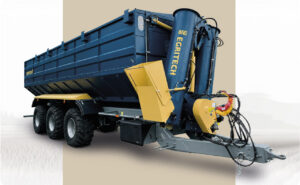
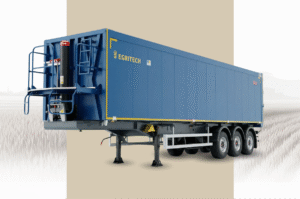
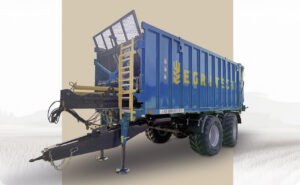
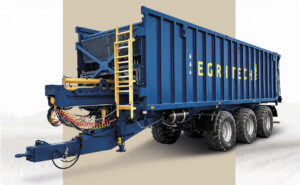
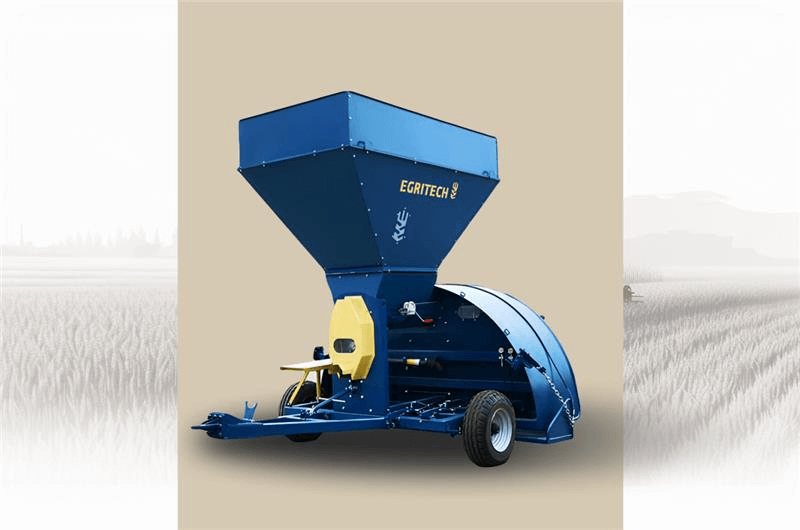
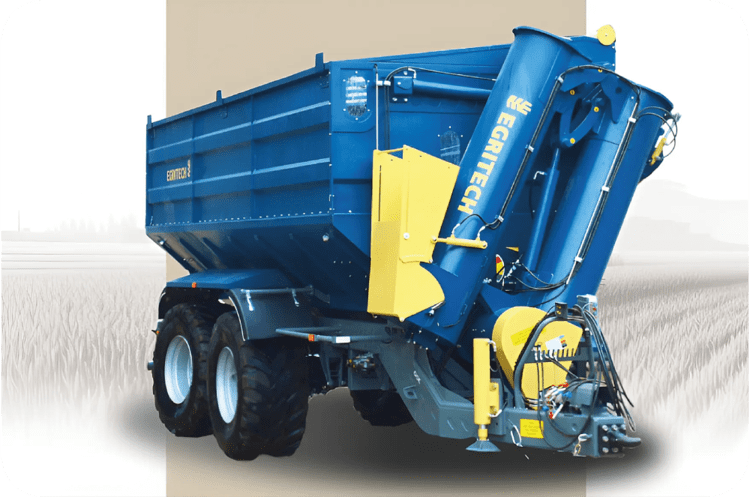
In all cases, using the Egritech storage hopper (БНП) proves to be a successful solution, making it significantly easier to further transport the harvest with grain carrier semi-trailers, trailers, and tractor trailers to the destination without loss or damage to the grain.
Therefore, it’s extremely important to adhere to the deadlines for harvesting grain crops. Also, use correct methods and quality equipment, as only in this way can significant product losses be avoided.










Comments