



Considering purchasing a semi-trailer for grain transportation? Then, start by familiarizing yourself with the rules for transport and movement of machinery on the respective roads. The passage of agricultural machinery on public roads is regulated by a series of legislative acts and rules. These are intended to ensure the free movement of both agricultural transport and other road users. The main aspects include permissible dimensions, weight of vehicles, as well as technical condition, which must meet safety requirements.
Maximum permissible dimensions:
- Length: 26 meters;
- Width: 2.6 meters;
- Height: 4 meters;
- Total weight: 42 tons.
It is important to note that:
- The trailer is not considered when determining the length of the vehicle.
- The height is measured from the road surface to the highest point of the unloaded vehicle.
- The total weight is the combined weight of the vehicle and the cargo.
Additionally, agricultural vehicles must have appropriate lighting, reflectors, as well as technically sound braking systems.
Definition of oversized and overweight vehicles
Have you heard of the term ‘oversize’ for agricultural machinery? It refers to the following: Oversize and overweight vehicles are cars, trailers, or semi-trailers whose dimensions or weight exceed standard regulations. They are used for transporting goods that, due to their size or weight, cannot be moved by ordinary vehicles.
Their movement requires adherence to special rules. This includes obtaining permits for transportation, adhering to speed limits and route selection, as well as periodic check-ups of the vehicles’ technical condition.
Travel conditions for oversized and overweight vehicles
Travel conditions include adhering to a travel schedule, selecting optimal routes, and avoiding movement through narrow streets, bridges, and tunnels with limited capacity. This is crucial for ensuring road safety and minimizing risks to infrastructure. The travel regime for such vehicles can be established based on traffic intensity at different times of the day, weather conditions, and other factors. Typically, travel is allowed during nighttime or during low traffic hours.
Procedure for the approval of routes for large vehicles
The approval of travel routes takes into account road conditions, the state of bridges and overpasses, as well as ensuring sufficient road width. This process involves cooperation with road services, local government bodies, and other responsible structures. Organizing the travel of large vehicles requires adherence to strict requirements for vehicle marking, the use of special signs and signals, and providing escort if necessary. It’s also important to ensure a professional level of training for drivers and accompanying personnel.
Grain trailers and semi-trailers are an essential attribute for farmers
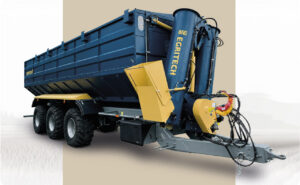
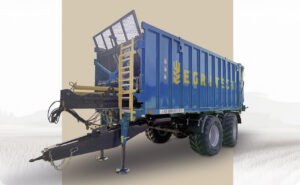
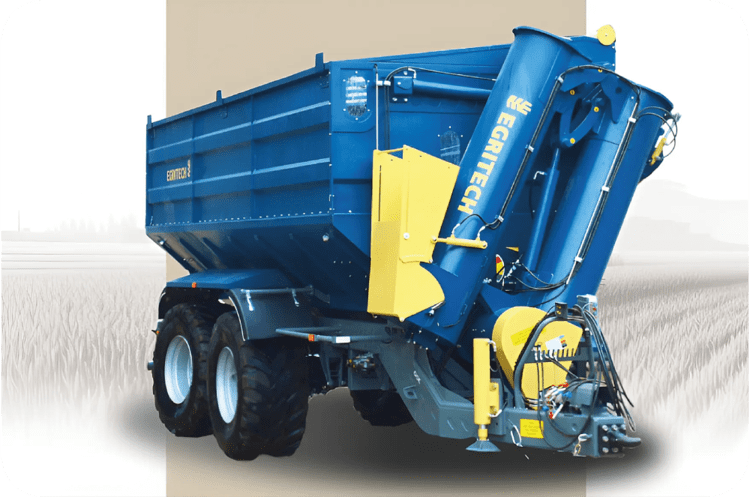
Grain trailers are widely used for the transportation of grain crops. They are characterized by high load capacity, airtightness of the body, and the presence of special mechanisms for airtight loading and unloading of grain.
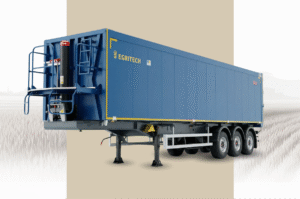
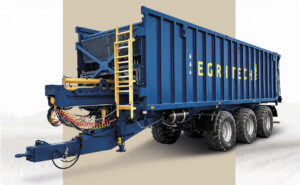
Grain semi-trailers are also extensively used in the agricultural sector. They provide convenience for transporting large quantities of grain over long distances, have increased capacity, and special design solutions for the safe transportation of grain crops.
The use of oversized and overweight vehicles requires a comprehensive approach that includes compliance with legislation, organizing safe passage, and prior approval of routes. Employing modern models of grain trailers and semi-trailers allows for the effective solution of logistical tasks and ensures uninterrupted transportation of essential cargoes.
Requirements for grain carrier trailers and semi-trailers
Grain carrier trailers are a crucial component of agricultural machinery designed for the transportation of significant volumes of grain on public roads. The main requirements for them include structural strength, high load capacity, and reliable cargo securing. Additionally, technical regulations consider the dimensions of the trailers to ensure their safe movement alongside other vehicles, without violating traffic rules or creating excessive load on the road surface.
Grain carrier semi-trilers also have their own peculiar features, which are regulated by the relevant legal acts. Their design must ensure stability during movement, as well as even distribution of load across the axles. Besides, semi-trailers must have the appropriate certificates and undergo mandatory technical inspection to prevent accidents and increase road safety on public highways.
Features and Advantages of Grain Trailer Trucks
Grain trailer trucks are distinguished by their ability to transport large volumes of grain in a single trip, which helps to reduce fuel expenses and increase the efficiency of transportation operations. They often feature an automatic unloading system, significantly reducing the time required for operations, as well as decreasing the risk of mechanical damage to the grain. Moreover, grain trailers
Features and advantages of grain semi-trailers
Grain semi-trailers are characterized by increased stability and the capability to transport even larger volumes of grain compared to grain trailers. They are able to efficiently transport over long distances, which is important in large agro-industrial farms. Thanks to their longer length and expanded loading platform area, semi-trailers ensure optimal weight distribution and reduce pressure on the road surface.
Choosing the Optimal Option for Grain Transportation
When deciding between a trailer and a semi-trailer for grain transportation, several key factors need to be considered. First, one must assess the grain transportation volumes and the distance it needs to be transported. For shorter distances and smaller cargo volumes, a grain trailer is preferable as it is more maneuverable and economical to use. For larger volumes of grain and longer trips, a grain semi-trailer would be a better choice, providing more cargo space and ensuring stability during movement.
For successful grain transportation, it is essential to carefully consider the choice of the appropriate vehicle, evaluate its technical capabilities, and adhere to regulatory requirements that ensure the safety and efficiency of transportation.










Comments